
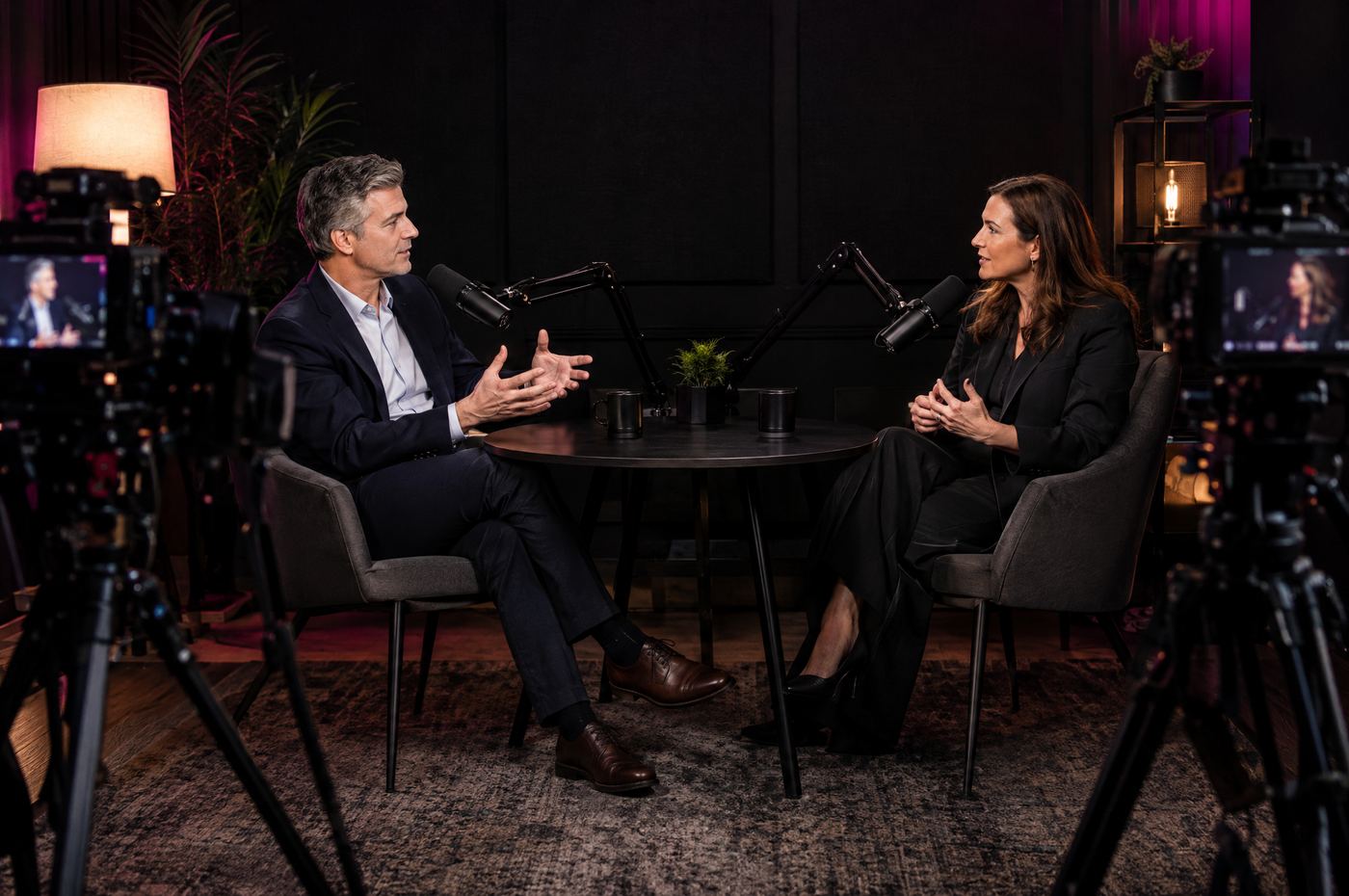
One conversation, a month of content: how small teams publish every week
Small teams usually run out of content for the same reason. Every post starts from nothing. Someone sits down on a Thursday afternoon, wonders what to say, writes something, finds an image, and posts it. The next week they do it all again, until a busy month comes along and the account goes quiet.
The teams that publish every week do it differently. They start from one good conversation and build everything else from it.
Start with a conversation
The best raw material most organizations have is the knowledge in their people's heads. The quickest way to get it out is to talk.
That conversation can be a podcast episode, an interview with your director, a client story told over coffee, or a recorded talk from your last event. Thirty to forty-five minutes is plenty. Record video if you can, audio if you can't. What matters is that someone who knows the subject is answering real questions your customers or members ask.
Turn it into the month
From one good recording you can usually get:
- the episode or full video itself, with show notes and a transcript
- four to six short video clips of the best moments, sized for each platform
- a handful of quote graphics made from your own templates
- a carousel or two that walks through one idea step by step
- a blog post built from the transcript
- the lead story for your next newsletter
That's a month of posting for most small organizations. AI does a lot of the heavy lifting: it transcribes, finds the strongest moments, drafts captions in your voice, and turns the transcript into a first draft of the blog post. A person still chooses the clips, edits the words and approves every piece. The voice has to stay yours, or people stop listening.
The weekly routine
A system only works if it fits into an ordinary week. Here's the rhythm we use on our own brands:
Once a month, record. One conversation, booked in the calendar like any other meeting.
Once a month, plan. An hour to choose the clips and quotes, draft the posts and schedule the month.
Every week, show up. Fifteen minutes to reply to comments, add anything timely and check what's working.
That's it. The work moves from every Thursday afternoon to two focused sessions a month, and nothing depends on one person remembering.
Should it be a podcast?
Often, yes. For associations, nonprofits and companies with something to teach, a regular show gives you that monthly conversation by default, and it builds a relationship with listeners that a feed of posts rarely does. Company and member podcasts (private shows for staff or members) are often listened to more than the all-staff email.
But you don't need a studio to start. A good microphone, a quiet room and a clear idea of who the show is for will take you a long way. What sinks most podcasts is the work after recording, which is exactly what the system above takes care of.
Getting it running
If you want to try this with your own team, A Month of Content in an Afternoon is a three hour workshop where we plan, draft and schedule four weeks of posts with you in the room. If a show is on your mind, Start Your Podcast takes 90 minutes and gets you a format, a gear list and your first three episodes outlined.
And if you'd rather we ran it for you, that's what our podcast and video and social media work is for. Book a call and tell us who you're trying to reach.
Questions people ask about content for small teams
How do you turn a podcast episode into social media content?
Transcribe it, pick four to six strong moments for short clips, and turn the best lines into quote graphics. Then build a blog post and a newsletter story from the transcript, with a person approving every piece.
How long should a business podcast episode be?
Thirty to forty-five minutes suits most business and member shows. That's long enough for a real conversation and short enough to fit a commute.
Do you need expensive equipment to start a podcast?
No. A good microphone, a quiet room and a clear idea of who the show is for will take you a long way. The work after recording is what sinks most shows.
Can AI write our social media posts?
It drafts them well, especially from a transcript of your own people talking. Keep a person choosing and editing every post so the voice stays yours.
How much time does a content system take each week?
Once it's set up, about fifteen minutes a week to reply and add anything timely, plus one recording session and one planning hour each month.
Read next: What AI can take off your team's desk this week and Your Google Business Profile is the new front door.
It’s more than business:
it’s community.
Subscribe to The Network Daily for latest in business excellence
We hate SPAM. We will never sell your information, for any reason.


